


AI systems already shape what young people see, learn, and believe. Youth workers need practical AI literacy, a clear grasp of risks (bias, privacy, deepfakes), and concrete safeguarding protocols. Berlin’s vibrant tech and civil-society scene offers an ideal ecosystem for learning with real cases and responsible-innovation actors.
Objectives
- Build AI literacy: demystify how common AI models work (recommendation, LLMs, vision), where they help/harm, and how to explain them to teens.
- Embed ethics & safety: address bias, transparency, privacy/GDPR, deepfake detection, and age-appropriate use policies.
- Strengthen safeguarding: design protocols for consent, data minimisation, digital wellbeing, and crisis escalation in AI-enabled settings.
- Create ready-to-use resources: lesson plans and guidelines youth workers can deploy immediately.
Core Activities
- AI 101 for Youth Work: hands-on demos (chatbots, image tools), “how it works” visual walkthroughs, and myth-busting.
- Bias & Fairness Lab: test prompts/datasets, observe skewed outputs, and apply mitigation tactics; build a short “ethics checklist.”
- Deepfakes & Misinformation Studio: verify images/videos, watermarking basics, detection tools, and classroom simulations.
- Policy & Practice Clinic: draft an AI Use & Safeguarding Policy for youth centres (consent, age gating, logging, red lines).
- Stakeholder Roundtable (Berlin): dialogue with a local NGO/ethics lab on responsible AI in education/youth contexts.
- Daily reflections & feedback sprints to keep learning adaptive.
Expected Results & Impact
- Toolkit: AI literacy lesson plans, a bias-check checklist, deepfake-verification guide, and a model AI Safeguarding Policy.
- Youthpass-documented competences in digital literacy, ethics, and risk management.
- Implementation plans: each participant leaves with a 3–6 month roadmap to roll out AI literacy sessions safely.
- We encourage participants of all eligible ages (20+) to take part in our project.
- Gender balance: It is compulsory that the proportion of females and males is equal (50%/50%), namely 3 females and 3 males.
- Equality of chances: As one of the core values of Copernicus Berlin e.V. and its partners, no discrimination will be tolerated throughout the project, especially during the selection of participants.
- National Agency requirement: Partner organizations must be able to justify the integration of their representatives into the target group. Only participants belonging to the defined target group may be funded within this project.
- Youthpass: A Youthpass certificate will be awarded to all participants at the end of the training.
- Mix of existing and experienced youth workers, as well as newcomers to the circular economy.
- Willingness to actively promote values connected with the circular economy among young people.
- Demonstrated social sensibilities (socially active youth workers/volunteers engaged in local communities and motivated to promote what they have learned once they return to their country).
- Commitment to actively participate in all phases of the project: preparation, training course, and follow-up.
- Openness to share personal intercultural stereotypes and experiences, and to analyse them from different perspectives.
- Experience with, or strong interest in, working with the Erasmus+ programme.
Before joining the project, you'll be asked to read and sign a few legal documents that explain how project dissemination and reimbursements work. All of these documents will be available on the Campus platform before the project starts, as part of your application steps. Please make sure to go through them and sign them, as this is required to take part in the project.
Before the project starts, you'll be asked to complete a few preparatory activities designed by our facilitators. These will help you get familiar with the topic and feel more confident and prepared before the project begins.
- Complete the Participant’s mobility report provided by the EU.
- Implement at least one publicity activity to share the results of the project (e.g., blog interview, article, Facebook post), and conduct at least one follow-up activity using the experience from the training—individually or together with another participant from the same country.
- Any additional activities or initiatives for disseminating the project are warmly welcomed and highly appreciated.
- Note: Photos will be taken during the project for dissemination purposes. These may be published on the website and social media channels of Copernicus Berlin e.V. and its partners. By participating in this project, you automatically consent to the sharing of these photos and media content both online and offline.
Participants are allowed, at their own cost, to arrive and stay up to 2 extra days outside the official project duration and still have their flights reimbursed. However, in such cases, they must cover the accommodation costs for the extra days.
Once a participant’s nomination is confirmed, the next step is to submit a travel proposal for validation through the Copernicus Berlin Campus.
Each participant is required to include the following details in their travel proposal:
- Type of transport (flight, bus, train, car)
- Name of the transport company
- Departure date & place
- Arrival date & place
- Price of the ticket
- Screenshot of the travel offer (must include all relevant details)
Medical Insurance
All project participants are part of the EU, so you only need to bring your valid European Health Card. The coordinators will not take responsibility for any health-related issues.
Copernicus Berlin e.V. is not responsible for reimbursing tickets without our prior validation.
- This project requires using green travel options, such as buses and/or trains.
- Business or first-class tickets will NOT be reimbursed.
- Taxi costs will NOT be reimbursed.
- If you do not provide the original tickets, boarding passes, invoices, or bills with the ticket price, your travel expenses cannot be reimbursed.
- Additional flight services (checked baggage, meals, drinks, etc.) will NOT be reimbursed. Priority boarding may be covered for low-cost airlines if it was approved by Copernicus Berlin.
In our project, we will have an Intercultural Night. Please bring something that represents your country (food, drinks, sweets, etc.).
During the Intercultural Night, you will represent your country through presentations, videos, songs, or dances. Each country will have approximately 7 minutes for their presentation.
Please coordinate with your national teams in advance to organize your contribution.
On the first day of the project, we will have a special event: “Mug Exchange”. Each participant must bring a mug from their country and exchange it with another participant.
You may bring it from home or buy it — the choice is yours. The most important part is that the mug should come with a story, so be creative!
Your mug could be traditional, funny, cute, or simply have an interesting story behind it. Let’s create memories together!
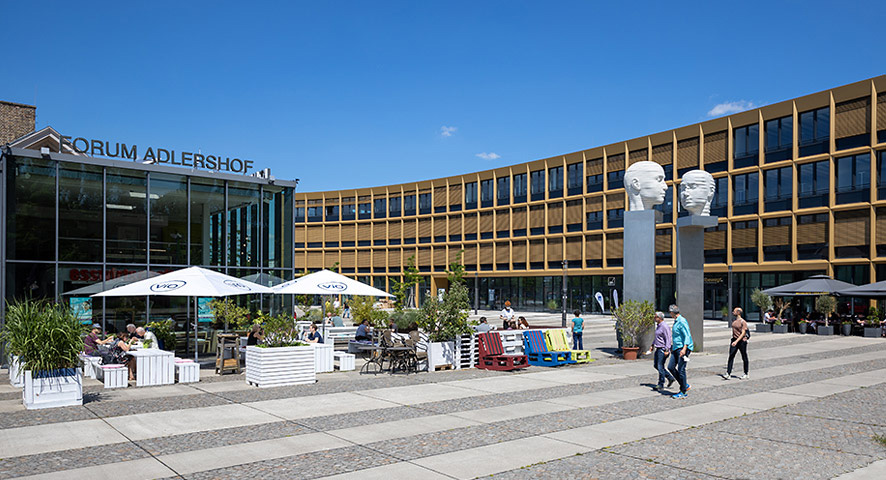
Berlin is full of energy, mixing its rich history with modern culture. It’s a city of contrasts, known for its art, diverse neighborhoods, and creative atmosphere. In recent years, Berlin has also become one of Europe’s main centers for technology and innovation. Many startups, developers, and young companies choose Berlin because of its open mindset, coworking spaces, and strong community support. Big international tech firms work side by side with small creative teams focused on new ideas in AI, green technology, and finance, making Berlin a place where the future of technology takes shape.
Every participant will receive a 70 EUR allowance to cook together in the apartments, fostering intercultural exchange through the joy of food and shared culinary adventures.
Please note that you will be required to pay a security deposit of 52€ (50€ deposit + 2€ service fee) via online payment on our Campus Platform. Without this deposit, we will not be able to finalize your registration for the training course.
The deposit may be used to cover any damages to the accommodation, venue, materials, or equipment. Furthermore, it may serve as compensation for inappropriate or unprofessional behavior during the learning mobility, should such instances occur. In some cases, an individual’s failure to comply with the rules and regulations may result in the forfeiture of the security deposit for the entire national team.
The deposit will be refunded after departure, provided that no grounds for retention have arisen. Please note that 50€ will be refunded, while the remaining 2€ will be retained as a service fee.
Youthpass is the recognition instrument developed for projects realised in the European youth programmes. Through the Youthpass certificate, participation in such projects can be recognised as an educational experience and a period of non-formal and informal learning.
Youthpass is applied throughout the project life-cycle to support the learning of participants. It also serves as a strategy to improve the recognition of non-formal learning in Europe.
At the end of the training course, all participants will receive a Youthpass certificate.
Police and emergency numbers in Berlin - https://allaboutberlin.com/guides/emergency-numbers
On the project, please make sure to bring a standard set of medication, including any specific medicines you need to take regularly.
- It is obligatory to bring a laptop or another device that will allow you to be fully included during the course.
- Bring clothes appropriate for the weather during the project.
All project-related questions must be asked through the Copernicus Berlin Campus platform.
A few days before the project starts, participants will receive a link to a Telegram channel and chat where all further information about the project will be shared.
- 09 October 2025 — Infopack release
- 16 October 2025 — Call for participants opening
- 15 November 2025 — Deadline for participants nomination
- 01 December 2025 — Participants preparation activities
- 15 December 2025 — Activities take place
- 01 January 2026 — Dissemination of project results
- Italy (Terra Dulcis) - 309.0 EUR
- Lithuania (Association Tavo Europa) - 309.0 EUR
- Czechia (Youth Prague z.s.) - 285.0 EUR
- Luxembourg (Formation et Sensibilisation L...) - 309.0 EUR
- Belgium (ASUL) - 309.0 EUR
- Germany (Copernicus Berlin e.V.) - 56.0 EUR
From the airport
Start at Berlin Brandenburg Airport and head to the Regional- und Fernbahnhof.
Take the S45 train toward S Südkreuz Bhf (Berlin) for about 34 minutes (11 stops) and get off at Hermannstraße.
Walk for about 1 minute to transfer, then take the U8 subway line toward S+U Wittenau (Berlin) for about 9 minutes (5 stops) and get off at U Kottbusser Tor.
From there, walk approximately 9 minutes (600 m) to reach Adalbertstraße, Berlin.
From the Central Train Station
Start at Berlin Central Station (10557 Berlin).
Take the U5 subway line toward U Hönow (Berlin) for about 8 minutes (6 stops) and get off at Alexanderplatz.
Walk for about 1 minute within the station to transfer, then take the U8 subway line toward S+U Hermannstraße (Berlin) for about 6 minutes (4 stops) and get off at U Kottbusser Tor.
From there, walk approximately 9 minutes (650 m) to reach Adalbertstraße, Berlin.
- Hallo! (Hallo!) — Hello!
- Danke schön! (Danke schön!) — Thank you very much!
- Sprechen Sie Englisch? (Sprechen Sie Englisch?) — Do you speak English?
- Wo ist die Toilette? (Wo ist die Toilette?) — Where is the restroom?
- Ich hätte gern... (Ich hätte gern...) — I would like...
- Entschuldigung! (Entschuldigung!) — Excuse me!
- Wie viel kostet das? (Wie viel kostet das?) — How much does it cost?
To ensure a smooth and organized registration process, partner organizations are required to nominate participants through the Copernicus Berlin Campus.
Partners should provide the following details of nominated candidates:
- First Name
- Last Name
- Date of Birth
- Gender
- Fewer opportunity
After submission, the project coordinator will review all nominated candidates. The coordinator reserves the right to decline any nominee if there is a valid reason.